First: should you email at all?
Some buyers don't read work email. Some products can't pay for the channel. If any of six conditions applies, the answer is already no, and you found that out in an afternoon.
Focused cold outreach experiments to validate your ICP, test an offer, or check demand for a feature. Built for B2B SaaS: Sellvance confirms whether the emails arrived and tells you when the result is statistically clear. Then it runs the winners as automated campaigns, on the same platform.
New accounts start with 2,000 free connects. No credit card required.
Some buyers don't read work email. Some products can't pay for the channel. If any of six conditions applies, the answer is already no, and you found that out in an afternoon.
Segment, persona and offer, plus the reply rate that would make it worth acting on. The threshold comes from your own economics. It's set before any data arrives, and it never moves.
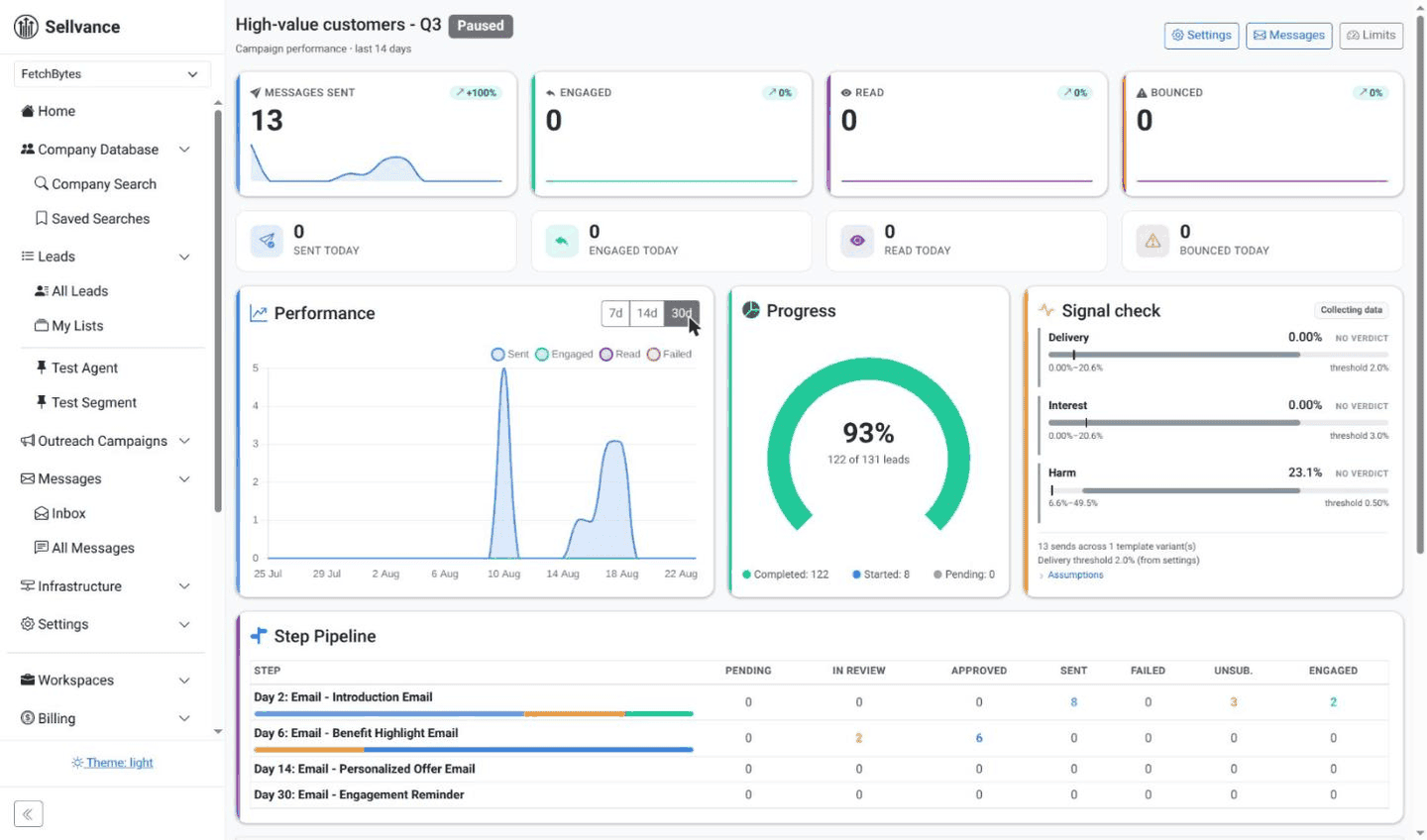
Zero replies fits a bad offer and a spam folder equally well. Out-of-office auto-replies only come back from mail that reached an inbox, so Sellvance counts them. When they're missing, the reply verdict is blocked.
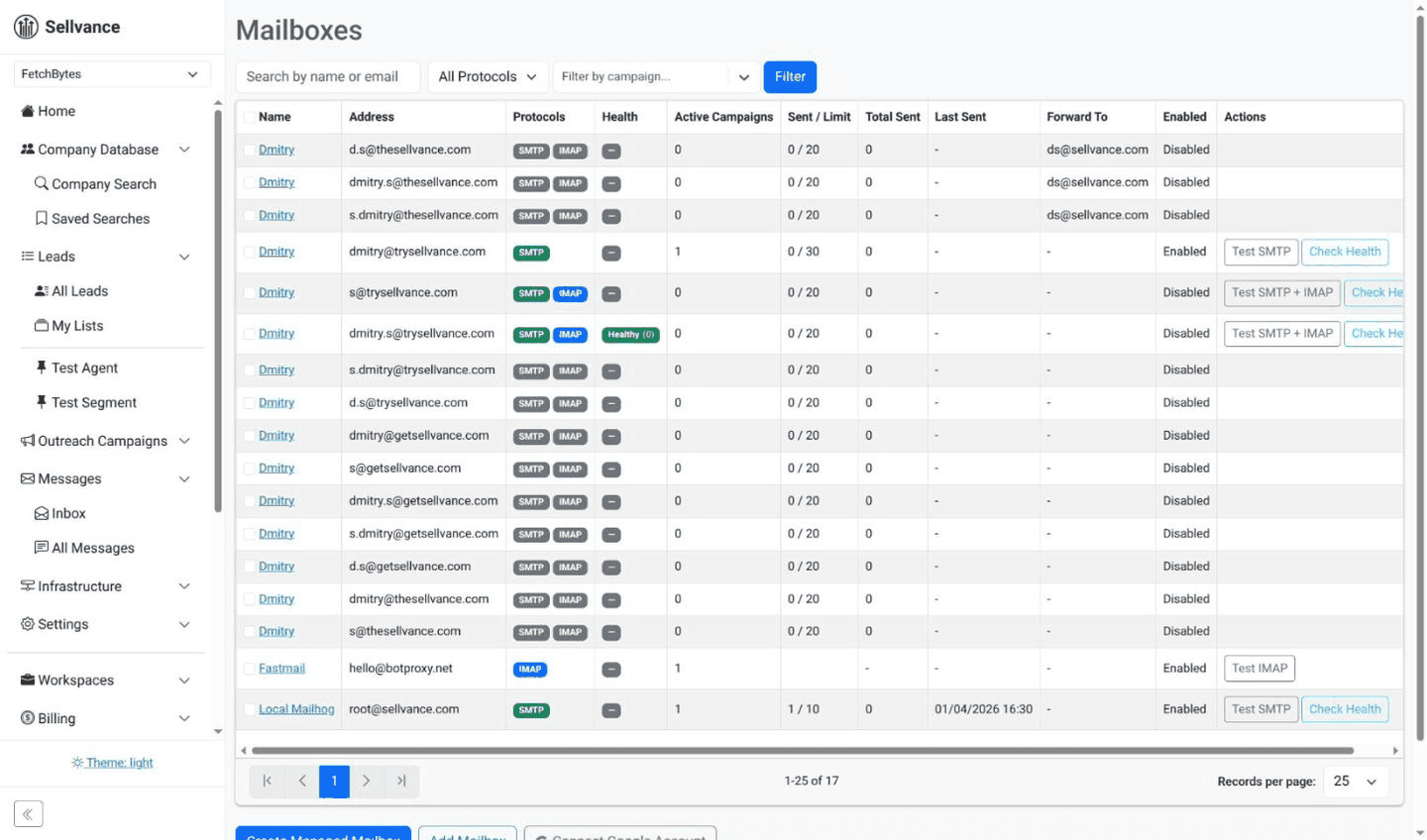
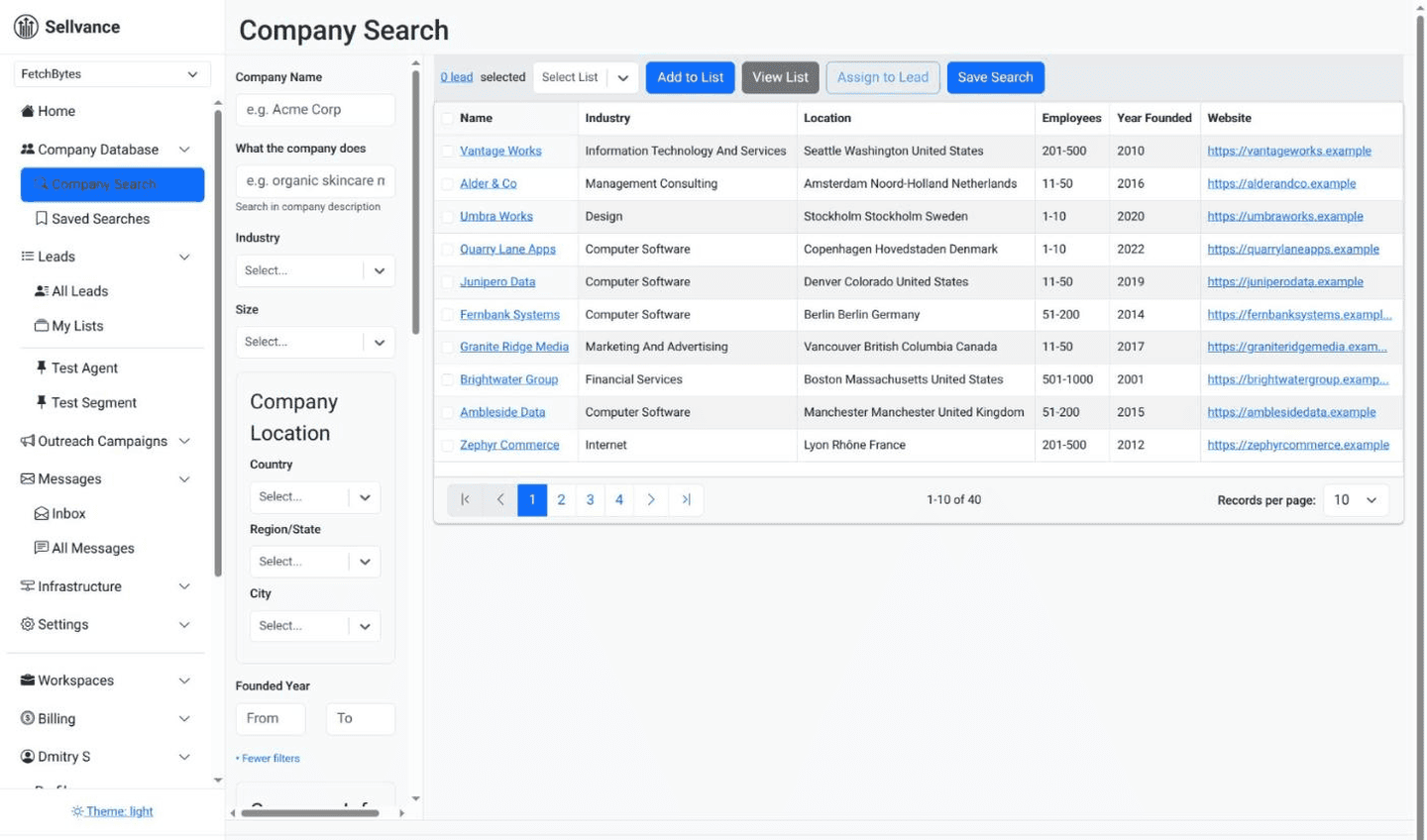
Pick from 9.5 million companies by what they actually do. Anyone your team already contacted goes down the reject chute automatically, so every test reaches people meeting you for the first time.
Before anything runs on its own, you look at real leads and real emails end to end: every field filled, every email reads like a person wrote it, the placement test lands in the inbox.
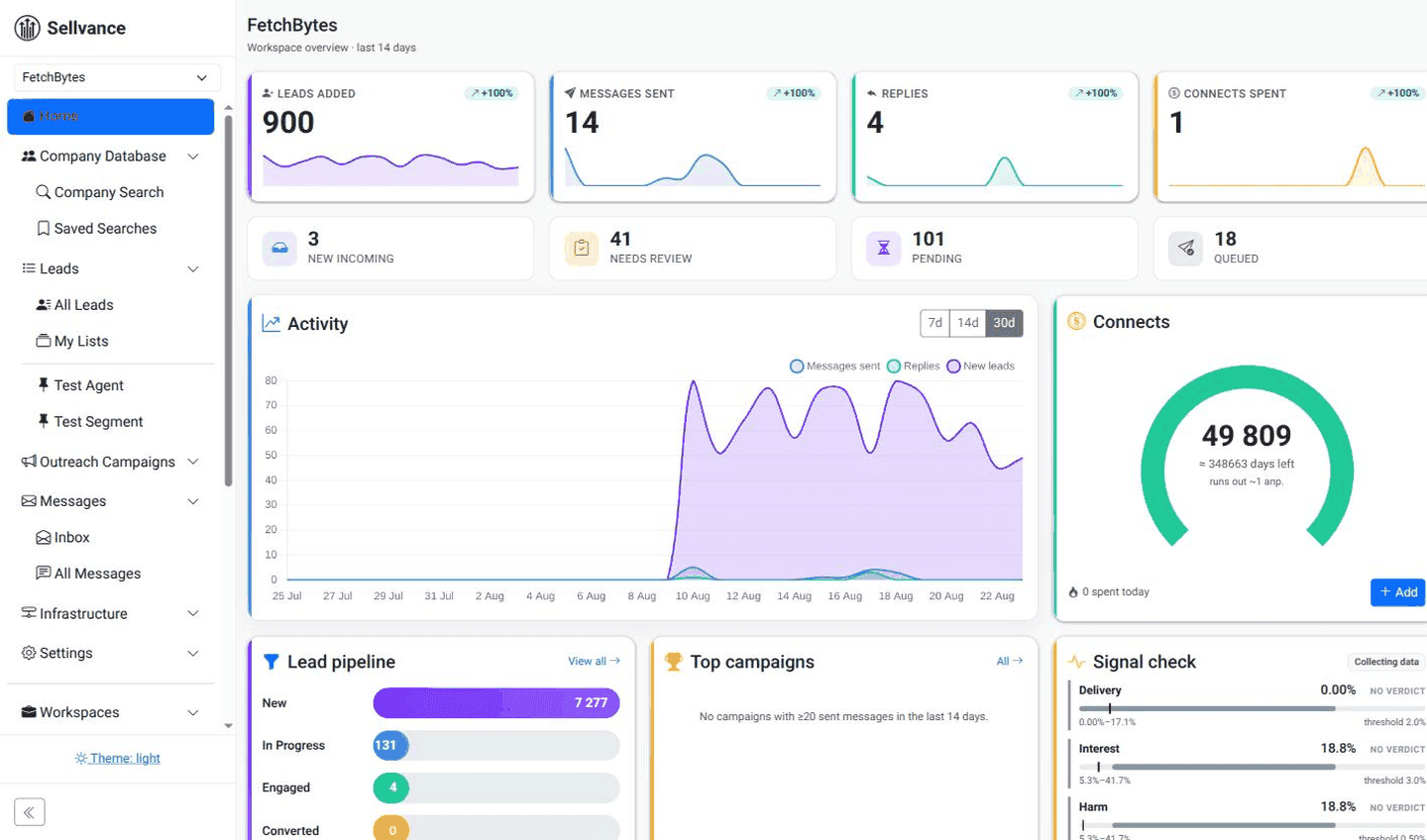
Autopilot enriches, qualifies, writes, reviews and sends at the daily pace you set. Copy, mailboxes and the target stay locked until the planned sample is reached.
Delivery and unsubscribes are watched every day. Interest is read once, at the planned sample. The bracket around each gauge is a 90% interval, and you can watch it narrow as sends come in.
Works, doesn't work, grey zone, harmful or invalid, decided by the rules you wrote down before the first email. “No” is an answer too, and it tells you which single thing to change next.
A winner gets a separate campaign with more mailboxes and a bigger daily limit. The experiment's numbers stay clean, and the Signal Check keeps watching delivery and unsubscribes.
Each one looks exactly like a real result.
Zero replies looks the same whether the offer is wrong or the mail sits in spam. Teams rewrite copy that was fine, or give up on a segment that never saw the email.
Two replies from forty emails is not a signal, and neither is zero. Most tests stop long before the numbers can say anything either way.
“Four percent is actually pretty good” is easy to say once you've seen four percent. A target chosen afterwards confirms whatever happened.
Mail servers send out-of-office replies without anyone reading the email, and Gmail and Outlook hold them back for mail filed as spam. Sellvance counts them. When they're missing, the reply verdict is blocked, instead of telling you the segment is dead.
Search 9.5 million companies by industry, location, size and what they say they do. Companies you've already contacted are left out automatically, so every test hears from people meeting you for the first time.
Every campaign has a Signal Check: an exact statistical test of delivery, replies and unsubscribes against the thresholds you set. It says pass, fail, or how many more sends it needs, so you neither give up nor celebrate at email forty.
Sellvance doesn't tell you what reply rate is normal. It asks what would make the channel pay for itself in your economics, and tells you whether you hit it.
None of these rows says what reply rate you'll get. Each says how many emails it takes to know. The stronger your offer is against your threshold, the cheaper it is to prove.
See how it's calculated| What's tested | Threshold | If the true rate is | Sends |
|---|---|---|---|
| Delivery | 1% | 0% | 299 |
| Interest | 3% | 6% | ~282 |
| Interest | 3% | 8% | ~127 |
| Interest | 3% | 10% | ~66 |
| Interest | 5% | 15% | ~52 |
| Interest | 10% | 25% | ~40 |
The language of a test, not of a campaign.
Segment, persona and offer, plus the reply rate that would make it worth pursuing. Decided before anything is sent.
Search the database, enrich and qualify. Companies you've contacted before are left out.
Check a handful of leads by hand, then let autopilot enrol, write and review the rest.
Works, doesn't work, or too close to call, by the rules you wrote down before the first email.
Once an experiment says “works”, you don't need another tool. Run the same segment and offer as a fully automated campaign on Sellvance, and let it keep going on its own.
The problem is the same at every stage. Only the cost of a wrong guess changes.
Every month spent on the wrong segment comes out of your savings. Test a segment for the cost of a few hundred emails before you commit a quarter to it.
Every month spent on the wrong segment comes out of your runway. Find the segment and the offer that get a response before you build a sales motion around them.
When someone else runs your tests, what they learned leaves with them. In Sellvance every hypothesis, threshold and verdict stays in your workspace, and the next experiment starts from it.
In our July wave we sent 337 emails across 13 campaigns, each to a different segment, with one offer. Nobody replied. Every reply-rate dashboard would have shown the same zero and let us conclude the market wasn't interested.
The Signal Check said something else. Not one out-of-office reply came back either. If 1% of recipients were away, as our history says they usually are, the chance of seeing zero in 337 sends is 3.4%. Delivery failed, and the reply rate was blocked from being read as a verdict on anyone.
The unsubscribes filled in the rest: three people opted out, so some emails did arrive, while the auto-replies were being filtered away. Neither signal alone was a diagnosis. Together they pointed at the channel.
The cause turned out to be a sending IP in South Africa with no reverse DNS record. Mail servers check that before they read a word of the email. The zero looked like a verdict on the market. It was a verdict on a PTR record.
337 sends across 13 campaigns and one offer variant, 29 June – 12 July 2026. Real numbers from our own outreach.
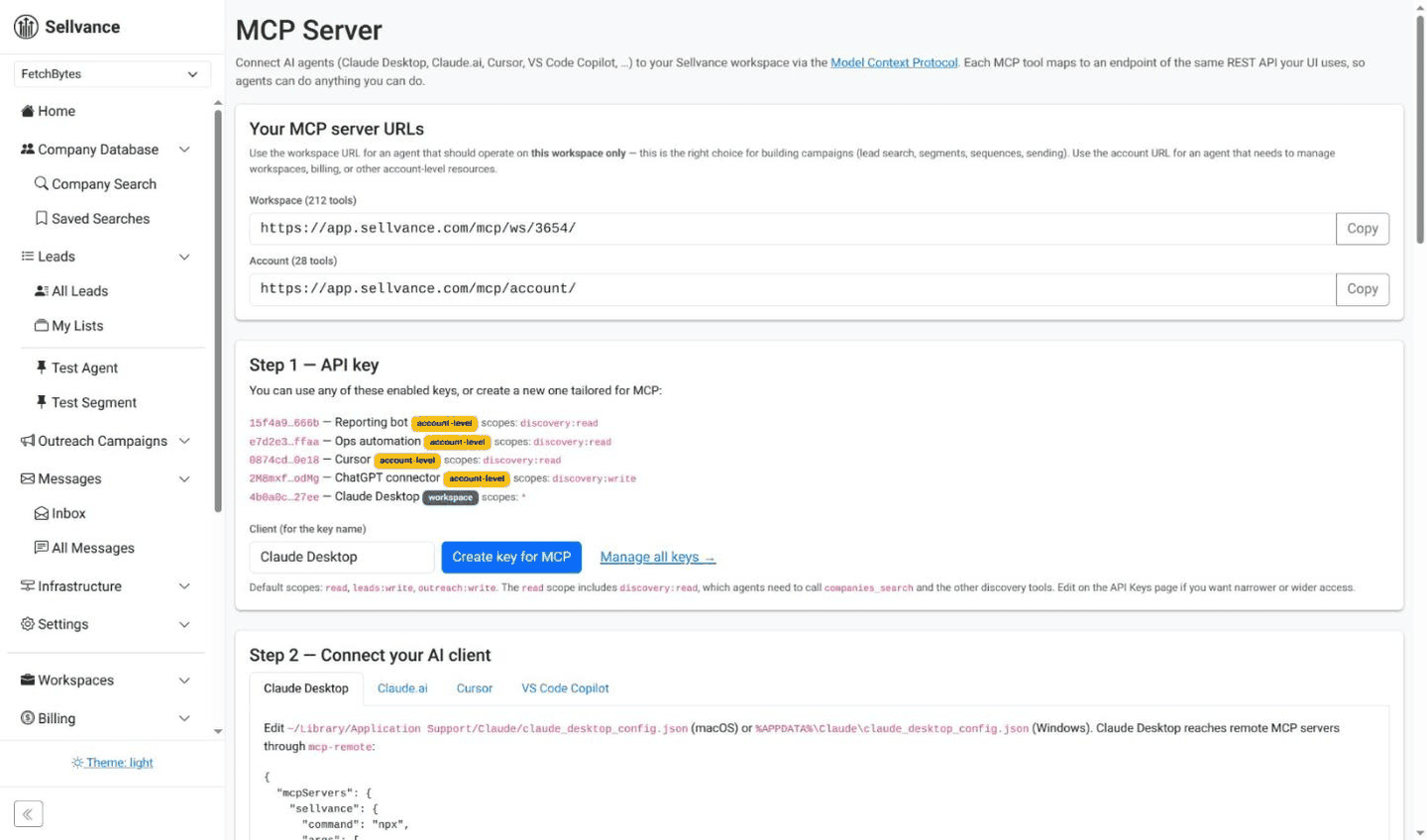
Every Sellvance workspace comes with an MCP server. Connect Claude, ChatGPT or Cursor, hand it the playbook, and it can set up the sample, validate the first leads, and report the verdict in plain words.
Some audiences can't be reached this way at all, and no amount of copy fixes that. If your ACV can't pay for the channel, if your buyer doesn't read work email, or if your persona is already saturated, the answer is no before you send anything.
We'd rather you find that out in an afternoon than in six months.
Read when cold outreach is the wrong channel →Create an account, write one hypothesis, and set the target before you send.